Friday, May 31, 2013

for my last birthday i received murder


When I see lists of love languages I see stuff like:
  • Words of Affirmation
  • Quality Time
  • Receiving Gifts
  • Acts of Service
  • Physical Touch
I never see MY family's love languages listed which include:
  • Sass
  • Murder narratives
This second one in particular very relevant to the women in my family, esp. to my grandmother, mother, and me.

My grandma Day


My mother

Me


Some of my very fondest memories with my grandmother include sitting downstairs in her house on obscenely comfortable modernist couches in a pile of pillows stress-eating super fancy cheese and fruit as we watch BBC murderdramas. 


Also this picture.  Can anyone handle how glam my grandma is here.  

If the Days had a house motto like in Game of Thrones it would be Sass and Cheekbones.


Likewise with my mother, in her bedroom--her on the blue couch, me having started on the bed but collapsed onto the rugs-and-stone floor in anxiety as we mainline diet coke and yell OH NO OH NO OH NO at the screen as interpolations to our running commentary on the attractiveness of the actors.  


We send each other recs and when we get together we've seen all the same shows.  (We can also do pretty solid impressions of true-crime narrators but that's neither here nor there.)


I don't know why this is, exactly; perhaps there is something in that specific type of genre narrative that speaks to our generally dramatic natures.  I do know that like none of us have seen The Notebook but we can pretty adequately discuss the differences between the UK and the Swedish adaptations of the Wallander detective series, so.


Kenneth I say this with love 
but 
IF YOU ARE MORE BLEAK THAN THE SWEDES YOU ARE DOING IT WRONG


So for my last birthday, my mom brought me to Bouchercon, a murder mystery convention.  A+ idea all around.  We'd been before and I've talked about it before; my positive experience at my first one was a big factor in me deciding to move to San Francisco.  This time we were in Cleveland, with a whole group of just BRILLIANT wonderful women and we all made the pilgrimage to Ohio to mix with our people--our fellow murder-and-literature-crazy people.


I tend to love things pretty intensely and sort of unwillingly (news to no one) and mostly I love these things by myself.  (WHAT is UP, german expressionism and comics and ergodic literature, you alienating little hobbies, you.)  But conventions of course are designed to alleviate that sort of resentful loneliness.  It is just so enchanting and relaxing to be in the same place in a giant crowd of other people who continue to think murder puns are hilarious after 4000 of them have been made over the course of three days.  (You could say they're TO DIE FOR ahahahahahaha)


I am actually the literal worst at taking pictures but here's one I had of the hotel and everyone milling around having feelings about things

We tended to split up during the day, with Mom skewing towards the panels on procedurals and true crime, while I was like front row at all the high-gothic-opera and Scandinavian-chill-horror stuff.  But we both went to all the Sherlock stuff because Sherlock.  And there was a lot of Sherlock stuff.


A Sherlock panel.

I know I've talked about Laurie R. King's Mary Russell series before.  Mary was my baby boo.  Like a lot of kids my reading level far outstripped my age and this was before YA and female protagonists were such a thing so I didn’t have many to choose from.  I bonded with Mary because she was smart in a world that didn’t welcome that, and she was a girl mostly alone in a world of predators.  (See also: Clarice Starling; Dana Scully.)   And of course she got to hang out with Sherlock who has been my literary boyfriend since age 10.

awww yeah baby


Since Mom's (and my I am claiming them) friends are like crazy connected I got to go to a dinner with her and talk to her.  I got to really talk to her this time; she is as composed and sassy and bright as one would expect. 


i'm the one on the right who is way too jazzed

It's odd being any sort of consumer of art--being a silent recipient in a communication.  Still.  I know for a fact that I am one of many women who as teens read those books and were super affected by a protagonist they could identify with.  If I ever have a daughter (or I mean let's be real about my prospects, a niece)  I am def. going to give her those books.

And of course the convention and being in a new town was just delightful--three days of running around, looped with tags and pins and carrying canvas totes and free books full of blood and death and author signatures.  The rows of velvet chairs in too-large rooms.  Cleveland: flat and clear and broad, next to a flat clear broad lake like the ocean.  The Rock and Roll Hall of fame's influence on the rest of the town, with Bowie just popping up out of nowhere like the freaking Virgin Mary.  
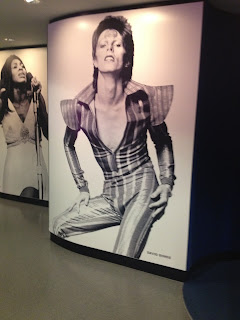

this was in the hall of fame so okay also killer legs kiddo

this was not and it was not the only one that was not


In the conference hotel all day, collapsed in corners like on high school trips.  All in all just a really pleasant relaxing time.


Especially because it came hard on the heels of like 12 corporate conferences I got shipped to over the summer.  

This will surprise actually no one but I do not have the temperament of a businesswoman and am not the largest fan of the Ballardian cold sterile hostile tedious world that is corporate life.  We'll see what sort of escape plan I can figure out.


Monday, February 18, 2013

what do you think, sirs?


Never Show a Good Movie in the Middle of Your Crappy Movie: Modeling the Enjoyableness of MST3K Episodes


Bradford Tuckfield, Bridgette Tuckfield, David Tuckfield, Emma Tuckfield, Madeline Tuckfield, Rebecca Tuckfield, Robert Tuckfield, Sophie Tuckfield
Contact: brt@wharton@upenn.edu; tbridgette.day@gmail.com

Abstract
We have identified the criteria that predict the enjoyableness of an MST3K episode.  In this paper we specify a model of the enjoyableness of MST3K episodes as a linear model: Y = B0 + B1X1 + B2X2 + … B18X18+e. The model can be interpreted as follows: Y represents the final evaluated enjoyableness of a particular episode.  Each X variable represents a measure of the degree to which each criterion was met in the episode.  Each B variable represents the coefficient corresponding to each criterion, measuring the extent to which a unit increase in the measured criterion corresponds to increased enjoyableness. To evaluate the model’s validity, we will compare our predictions with other statistics indicating enjoyableness, including user ratings and surveys.  This model will contribute to better understanding of MST3K, the fans it attracts, and the culture of riffing.


I.                   INTRODUCTION

Mike and the bots groan when Raul Julia’s character, the heroically named Aram Fingal, cues up Casablanca at the beginning of Overdrawn at the Memory Bank.  It’s an ill-advised move.  Despite Memory Bank's best efforts, it does not remotely approach the quality of the older film, as it lacks a compelling story, believable dialogue, quality cinematography, or other common criteria used to judge film.  “Never show a good movie in the middle of your crappy movie,” they say to the screen, and it’s hard to argue.
Despite this, Overdrawn at the Memory Bank is arguably one of the best MST3K episodes.  MST3K is unique - any comparison to other shows or films will inevitably fail. Thus, the quality of a given MST3K episode cannot be judged using the same criteria that are commonly used to judge film.
MST3K episodes are of variable quality; this is certain.  But unlike traditional films such as Casablanca, the quality of a particular episode is more difficult to define.  The base movie has to be bad, yes—but it cannot be too bad.  In addition, it has to be bad in specific ways.
We proposed to determine exactly what characteristics the base movie should have in order to make the MST3K episode enjoyable. To make this determination, we estimated an ordinary least squares regression model with fan rating as the dependent variable, and discover that there are indeed specific criteria that directly and significantly correlate with the enjoyableness of a particular MST3K episode.

II.                METHODOLOGY

First, a quick definition of terms: Here, “movie” refers to only the base movie that, combined with riffing and host segments, comprises an episode of MST3K.  It does not include the riffing and host segments or any other MST3K overlay.  “Badness” refers to the movie’s deficiencies when compared to classics such as Casablanca, and specific components of how “bad” a movie are found below.
In our study, we estimated an ordinary least squares regression model with fan rating as the dependent variable. Our model can be stated as follows:

            Fanratingi = α + β1predictor1 +…+ βnpredictorn + εi

where i indexes all rated movies, error terms εi are i.i.d. random draws from a normal distribution, and the predictors are the criteria described below. Because our sample size was relatively small (N=19) and was actually less than our number of criteria (22), we did not estimate a full model with all predictors, but rather (with a few exceptions) estimated single-predictor models for each criterion. We will report point estimates and significance levels for each of these models.
Fan ratings (used as the dependent variable), are from an independent fan survey conducted at the MST3K fan “Discussion Board.”[1]  Participants were asked to rate episodes on a scale of one to ten for enjoyableness.  Although votes per episode varied due to the release status, votes averaged 10.802 per episode, varying between six and nineteen votes.
In order to maximize the variance of the dependent variable, we chose ten of the lowest-ranked episodes and nine of the highest ranked episodes to watch and score according to our criteria.  We watched two movies as a group to informally ensure that our ratings were well-calibrated and that we had a high level of inter-rater agreement.

The movies chosen were:

GOOD (Highest-ranked):
Manos: The Hands of Fate
The Violent Years
Beast of Yucca Flats
Night of the Blood Beast
Jack Frost
Girl in The Gold Boots
Pod People
Soultalker
Final Sacrifice


BAD (Lowest-Ranked):
Lost Continent
Blood Waters of Dr. Z 
Castle of Fu Manchu
Swamp Diamonds
Gunslinger
She Creature
Hamlet
Invasion USA

Gamera vs. Zigra
Mighty Jack

We created a score sheet to record measurements.  We included subjective, objective, and meta-data criteria on the score sheet, as detailed below.

A.     SUBJECTIVE CRITERIA (graded on a scale of 1-7)

We determined 5 criteria that were “subjective” to opinion, based on overall plot and execution.

1)     MONOTONY—depended on scene and character changes; visual interest to film.  A movie that scored 1 would have almost no scene or character changes, visual interest, or modulation in soundtrack/dialogue.  A movie that scored 7 would have a great deal of all of these, probably to the detriment of any storytelling.

2)     INTERESTING PREMISE OF MOVIE—referred to novelty and interest of plot, conflict, and stakes. Or in other words, if someone just told you the plot or premise of the film’s plot, how engaged or intrigued would you be?  Is an interesting story promised by the film?  This was ranked on a scale of 1-7, with 1 being cliché or incredibly dull and 7 being fascinating.

3)     DELIVERY OF PREMISE: referred to how well the film acquitted itself in presenting and exploring the conflict inherent in the plot, no matter what or how engaging the premise? 1 meant utter failure to deliver; 7 meant completely successful delivery.

4)     OUTLANDISHNESS (PLAUSIBILITY) of MOVIE: Differing from suspension of disbelief, this related to the overall premise of the movie.  1 meant the movies was completely outlandish and you must suspend all sense of reality to watch; 7 meant high realism.

5)     QUALITY OF FILM:  Covered the quality of the film without the riff.  It took into account traditional film judgment qualities like finesse of direction, realism in character dialogue and interaction, emotional resonance, quality of cinematography.

B.     OBJECTIVE CRITERIA (numbered)

            While watching, we kept score of a number of “objective” criteria whose instances could be tallied.

1)     “OUT OF NOWHERE” OR ANTEATER FACTOR: So named for the moment in “Overdrawn at the Memory Bank” where anteaters are disparaged and the riffers go “Phew!  Huge slam on anteaters out of nowhere!”  We defined this as when an underlying movie does something absolutely out of nowhere—like when Puma Man suddenly leaps into the air and flies, although pumas are not known for their flight capabilities.  Or, when the protagonist of “Cave Dwellers” suddenly finds himself in possession of a working and modern hang-glider. 

2)     SUSPENSION OF DISBELIEF: Defined as an instance where the characters do not react in a normal human fashion, or the world does not react to the laws of physics despite nothing that went previously indicating that they wouldn’t.  For example, when a child goes missing, a father might do a cursory examination of the scenery and then move on.  Or, in Manos, when the hero gets knocked out and tied up, and does not particularly seem put out or ever really mention it happening to his family.

3)     NUMBER OF FAMOUS PERSON REFERENCES:  Referred to references made to or jokes hinging upon references to a famous person.  This was chosen to determine whether referential humor affected the quality of the episode.

4)     FAILURE TO DELIVER:  This was context-based.  We tallied the number of times a movie failed to deliver something promised.  For example, a death-cult that might destroy the world as five pasty guys with ill-fitting hoods.  Or, a promise in a film that if a particular truck exploded, a whole city would be taken out—followed by a very insignificant explosion with a minimum safe distance of maybe ten yards.

5)     FAILED SEXINESS:  Referred to times a movie tried to titillate—failure being endemic in the attempt. 

6)     SUPERFLUOUS TYPES OF REPETITION:  Some movies suffered from a particular problem or repeating certain types of scenes over and over—for example, in Plan Nine, at least ten minutes of film time are devoted to watching a very slow police car make its way to the cemetery.  Or, in Final Sacrifice, we are treated to innumerable shots of feet getting into vehicles.

7)     MOVIE-MAKING ERRORS:  These were reserved for things not done on purpose—sound equipment or costume zippers visible, severe issues with sound or lighting, etc.

C.      META-DATA

We also tracked whether or not there was a known actor in the film, the film’s genre, the film’s length, the episode’s host, the season the episode aired, and the film’s box office gross, if obtainable.
The quality of host segments was considered to be relatively constant and uncorrelated with other observed variables, and thus included in the error term of the estimated regression.  Our intuition was that with practice and feedback, the riffing quality would increase over time. Informally, we found that episodes from Season One were the least enjoyable. This matches our expectations since the show had just started and the riffing had not yet reached a high level of polish. When combined with the unpleasant riffed movie, this made the whole experience almost unwatchable.   Upon further review, this was reflected in the data from the initial survey, where Season One was extremely poorly rated, but seemed to swing upwards as time went on.  We believe this was due to the technicalities of hitting their stride as a show and figuring out what worked and what didn’t, rather than a reflection of the movies chosen or the quality of riffing.
The weighted running averages of these movies are found at website known as the MST3K “Discussion Board.”[2]

III.             RESULTS

The point estimates and significance levels of our estimated models are shown below. There were significant relationships between fan rating and monotony, good premise, and length. There were marginally significant relationships between fan ratings and suspension of disbelief and failure to deliver.

Point Estimate
Monotony
.423***
Good Premise
.146***
Delivering on Premise
.004
Outlandish-ness
-.116
“Out of nowhere” factor
.157
Suspension of Disbelief
.095*
References to Famous People
.033
Failure to Deliver
.282*
Attempts at Sexiness
.160
Superfluous Scenes
-.158
Technical Errors
-.031
Including a Famous Actor
-.091
Genre: Horror
.395
Genre: Fantasy
.567
Genre: Crime
.250
Genre: Period
-2.723
Genre: Sci-fi
-.535
Genre: Thriller
-.946
Genre: Western
-1.190
Length in Minutes
-.029**
Mike rather than Joel
.7403
Season
.091
*p<.1; **p<.05; ***p<.01

The figures below show scatterplots and fitted lines for the five significant or marginally significant predictors of fan rating.

Or rather, they would have if I could have gotten the scatterplots and fitted lines to copy onto the blog.  But trust me they were awesome and Bradford did them amazingly.


Based on this data, for the MST3K episode to be most enjoyable, the base movie will 1) not be monotonous; 2) will provide an interesting premise, 3) will contain more, rather than fewer instances of requiring a suspension of belief; 4) will implicitly promise, then fail to deliver important plot points, and 5) will be shorter, rather than longer.

IV.              CONCLUSION

In our lives as American consumers, we are served up a lot of crap, through life and what is presented to us as entertainment.  Life is hard, and sometimes the only movie playing at the local theater is Transformers II.  We find ourselves identifying with Mike and Joel and the robots, forced to consume despair-inducing junk because there is no other choice—and, in fact, it is sold to us as quality.  We are told these things are good, and they present themselves as enjoyable and desirable even though we know they are not.

There is a palpable despair in contemplating this cognitive dissonance.  Is this all there is?, we can feel like asking. Is this supposed to be what resonates?  Is this it?
While one cannot outright reject difficulty and despair, one can confront it rather than giving in.  This is done, as the hosts demonstrate, by banding together with others and calling out absurdity through camaraderie and humor.
Most people’s lives have variable and engaging premises with a certain understanding that variable and engaging things will be delivered—the American Dream.  Yet life can fall into monotony that more often than not fails to deliver anything overly spectacular.  It’s in this strange groove that the best MST3K episodes fall—the episodes cannot be too awful, or they merely incite boredom.  No, there needs to be a palpable despair induced by the promise of entertainment and escape, and then falling so spectacularly short of it.
It seems the best MST3Ks are little microcosms of an average human existence.  But instead of quietly accepting this and being driven mad by the despair (as the Mads hoped Mike and Joel might) it is best confronted through humor and unity.
A good MST3K episode can transcend ages.  Young kids enjoy it just as much as the adults, so the entire family can enjoy them together, and as a family of eight with kids spanning 11 years, we have done just that.  Not only does the family enjoy watching MST3K together, it provides years of continual bonding.  It provides a source of inside jokes for the family.  Comedy can unite even perfect strangers.  For example, when two strangers who know the story of “Alice in Wonderland” bond when, after the first tries to get his broken watch working, the second says "but it was the best butter."  So too does the family or group build bonding ties when in certain situations someone comes out with an appropriate memorable quote, such as "Huge slam on anteaters out of nowhere!," or "‘Sidehackin’ is the thing to do," or "Don't be splayed, don't be splayed!" or "McCloud!" or, even "Rowsdower!"  These become inside jokes for all members of the family, lightens the mood, and creates more unity—just as poignant, in its own way, as “Here’s looking at you, kid.”
We, the authors, have watched Casablanca as a family and in groups, and it is indeed an amazing film with great personal and human resonance and cultural relevancy.  But like many great films, it is a great personal experience, while a good MST3K is a group experience in overcoming despair, and fostering unity and friendship.
Never show a good movie in the middle of your crappy movie; it will ruin the fun.

Friday, February 1, 2013

Punk Cancan

I was going to try and justify having this as a title image by like being "life in SF is a punk cancan amirite" but really I just really like neon word art.

Some things about now: I officially wrapped up my first project today, and currently the biggest problem I am having is I keep putting my chai cup too close to my dark chocolate square so it keeps melting.


Everything is lovely and is only getting lovelier.


I feel very much a different person--which is always strange.


Now is also the time I wanted to catch up on the past months--mainly by going through my pictures and seeing what stands out.


One of my interests (as you know) is being not only abnormally interested in things, but abnormally interested in why I'm abnormally interested in those things.  I finally figured out the big through-lines through a lot of my preoccupations were transformation and performance-as-identity.  I cite as proof mythology, superhero comics, and David Bowie.  This has been lifelong, but was certainly honed by the type of identity code-switching it takes to get through BYU and then start in the vaguest and most corporate of jobs as a consultant.


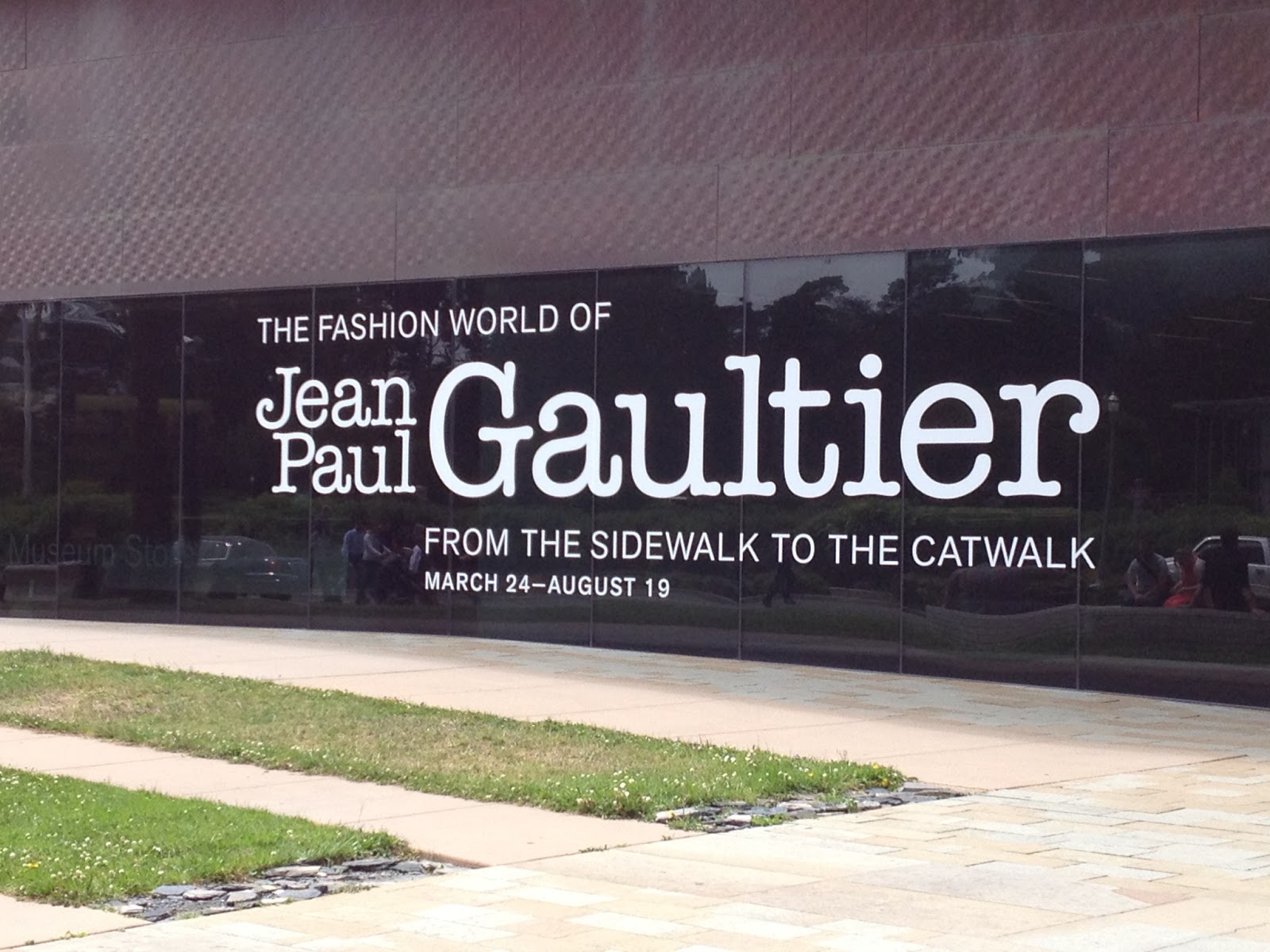
Lately this has translated into a heightened interest in the world of couture, which I think was kicked off by the Jean-Paul Gaultier exhibit at the DeYoung I went to a looong time ago.


They carved out the whole bottom floor of the DeYoung, which I used to think was this beautifully jarring geometrically Bauhaus construction in the middle of Golden Gate Park, but I later found out it is in fact designed to blend in with its scenery especially when the copper it’s covered in oxidizes to green in a couple of year so shows what I know about architecture.  


Really, though?  It's not like organic.  I love it, but am I wrong? 


They grouped the whole exhibit into sections, starting with the signature Gaultier looks like the stripes, and the religious and mermaid iconography.  They achieved this with creepy-as-eff mannequins with superimposed filmed faces.  David Bowie liked this so much he used the effect as the entirety of his first music video in TEN YEARS REALLY??  REALLY DAVID THAT'S WHAT YOU WENT WITH COOL AWESOME.  

But I digress.

Most of them were speaking if you got up close which was totally charming and not at all the worst uncanny valley experience ever; the Gaultier stand-in was reciting interviews.

The mermaids all walked on crutches because of their tails--this was pretty cool to see on film as they jerked and hobbled their way down the catwalk, literally handicapped in such an unforgiving environment.

The next section featured a lot of his designs inspired by undergarments--but like, foundation garments instead of lingerie.  This includes the famous cone-bra corset from Madonna's Blonde Ambition tour, but it was a bit boring so I didn't get a picture.

Scaffolding and exoskeleton for the human body as dress.

This jeweled skeleton-corset getup is one of the more famous pieces I think.

I know this is because I've read too much Paglia, but even though I am not really that interested in the phenomenon of body modification I do like thinking about the idea of fashion as forms superimposed on the sort of formless mutable human body--in this case literally conforming and shaping, as beauty.

Here, have a quote from Camille Paglia that this section made me think of: “Beauty is our weapon against nature; by it we make objects, giving them limit, symmetry, proportion. Beauty halts and freezes the melting flux of nature.” 

(I mean and she's literally talking about beauty in the Kantean beautiful-v-sublime dichotomy here re: fashion and as such it is not as complimentary as it sounds but fashion is a problematic art form at best anyways so I feel good about using it.)

Oh yes and of course there was the bondage-sexy-room.

Which was extremely dooo-hoo-hoo-aren't-we-NAUGHTY which I think I would have gone the precisely opposite tack to really isolate the pretty incredible aesthetic from the sexually utilitarian underpinnings and influence but whatever.


The other rooms focused on the more culturally relevant (for the time) pieces--I guess couture was not always the experimental artsy thing it is now.  A lot of pieces were chosen for the pomo cultural mashup/juxt they were, which seems pretty old hat now but I understand was significant for the time.

This lady had it going on, however.

In the room with all the punk stuff was this moving catwalk of more traditional French-style pieces get it Punk Cancan GET IT.

But so even though I didn't quite get the cultural relevancy of the pieces, I really enjoyed seeing them.  There’s a great silliness and fun to them.  They're all pop-culture and couture and juxtoposition and boundary-blurring—drawing on bringing the inside outside and the outside inside.  It's pinning a culture and identity on a malleable human form.  And in fact there was a brashness and a joy to the pieces that was just like infectious.  Everyone was walking around smiling; there were little kids.

There was also the best hat of all time ever in the world ever.

Hands down though my favorite part was the rooms dedicated to his film collaborations--with a special emphasis on The Fifth Element, aka the one where Milla Jovovich wanders around in an orange wig going LEELOO DALLAS MOOLTEEPAHSS and Gary Oldman is a Cajun arms dealer in a plastic suit.  

But of course is so suave even in his character sketch.  (I live for character design.)

The only actual costume they had was Ruby Rod's, which is all I will say on the matter.

In addition to The Fifth Element, the other two really significant film contributions Gaultier made (I feel) was designing costumes for Jeunet's "City of Lost Children" and Almodovar's "The Skin I Live In."  Although he's kind of a bizarre match for Jeunet's grimy dreamlike aesthetic, he's perfect for Besson's self-conscious drag-splendor weirdness.  He's WONDERFUL for the content of "The Skin I Live In," and the thematic freakiness of literally carving and cutting out and sewing a new identity, of wearing a body like a disguise.

It reminds me of Michael Chabon's essay "Secret Skin," about dressing up as superheros and the awesome impossibility of superhero fashion: "It's not about escape, I wanted to tell [my teacher]...it was about transformation...the superhero's costume often functions as a kind of magic screen onto which the repressed narrative may be projected. No matter how well he or she hides its traces, the secret narrative of transformation, of rebirth, is given up by the costume."

WOW this got realllly silly really fast.

In conclusion:

I love silly clothes.  I love San Francisco.  I love my life and all my awesome opportunities.  I can still quote a good bit of the Fifth Element.  I miss my family in Austin.  I bit off way more than I can chew for the next few months, writing-wise.  My orchid is still alive.  I may soon finally realize my ambition of presenting a paper about Batman and Norse mythology AT THE SAME TIME.  Being a consultant is pretty cool.  I love San Francisco.  

I can't wait to see who and where I'll be in another year.


Monday, September 24, 2012

other 3999 pictures of gaultier haute couture available upon request


This picture should simultaneously illustrate that I live in a city, that I like dramatic neon neo-noir stylings, and the below paragraph.


(A brief caveat—I am evidently awful at taking pictures.  When trying to pull pics for this post I had nothing of like my friends or family or actual scenic landmarks buuuuut I did have like a hundred blurry shots of various art exhibits and things I guess I found really funny/cool at some point but are utterly nonsensical to me now.  So bear with me.)

View from Twin Peaks, which is where I live.


So four months ago I moved to San Francisco with the help of my dad.  This is an update since then.

This is my awesome Dad; we are on Coit tower.


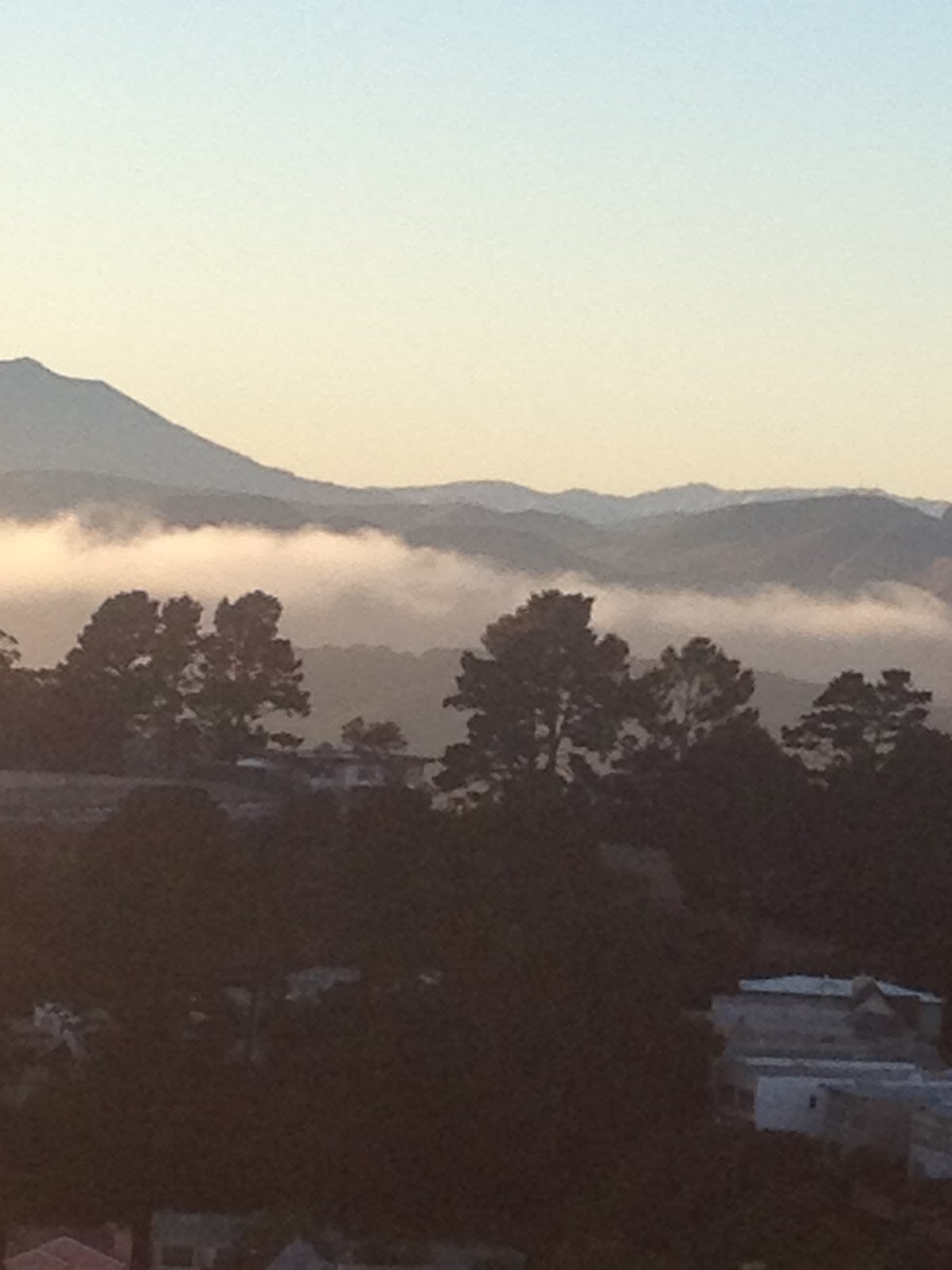
I love this city.  This city is perfect.  It’s a city of hills, of pitching and lurching your way from point to point.  The trees are enormous and twisted and dark green.  Every night the sea fog rolls in, roiling and dense like smoke.  

This is right when it starts--it literally rolls in, tumbling and tangible and enveloping everything.  Also, FREEZING.


It’s always the perfect amount of chilly, always, even in summer.  The architecture is narrow pastel stucco and wood and neo-Victorian.  People wear trenchcoats and tights.  There is non-traditional gender presentation.  Basically tripping over coffee shops and small bookstores walking everywhere.  The food.  McSweeney’s.  The weird store next to McSweeney's with the disconcertingly large back room full of carnivorous plants. 

McSweeney's small press offerings: basically like porn for me.

There is everything to do here all the time.  There’s German film festivals and readings and performance art and like 8 operas a year.  (I’m going to Moby Dick for my birthday; am reaaaaallly excited for the next Ring Cycle.)  Cindy Sherman downtown like it's no thing; across the city, Man Ray and Lee Miller.  Everything all the time everywhere. Whatever.

"We will not become what we mean to you."

Did not have time to find out what these ladies were doing, but they had dresses and popcorn and next to them a girl band was playing lesser-known tracks off of "The Rise and Fall of Ziggy Stardust and the Spiders from Mars," and if that isn't an afternoon well-spent then I don't know what is.

When I moved here, I lived next to a modernist cathedral outside Japantown.  Now, I live in Twin Peaks, so I can make David Lynch jokes to myself as well as live on a hill above the Castro with an amazing view, when not surrounded by mist like a Silent Hill game.  (Were there enough pop culture references in that sentence; I have more.)

Next door-neighbor for the summer


I love my job.  It is stressful as an extremely stressful thing but it is interesting and engaging and will remain so.  Consulting is a trippy, trippy industry.

Here's my business card balanced on my dresser though.  In case you need any consulting.  I'm in the SaaS practice, which is pronounced "sass" so I just tell everyone I'm a sass consultant.


I’ve traveled a bit since I’ve been here:

·      CHICAGO, PART 1: In a suburb in a corporate compound made out of a renovated Catholic girl’s school.  Everyone lived on top of each other in little cruiseship cabin rooms going through four weeks or training while the European management consultants breezed in and out for their four-day courses.  Weekly movie-night was always and seemingly without irony something like “Wall Street” or “Limitless”—I’m surprised they didn’t like play “Gattaca” with the last ten minutes cut out or something.

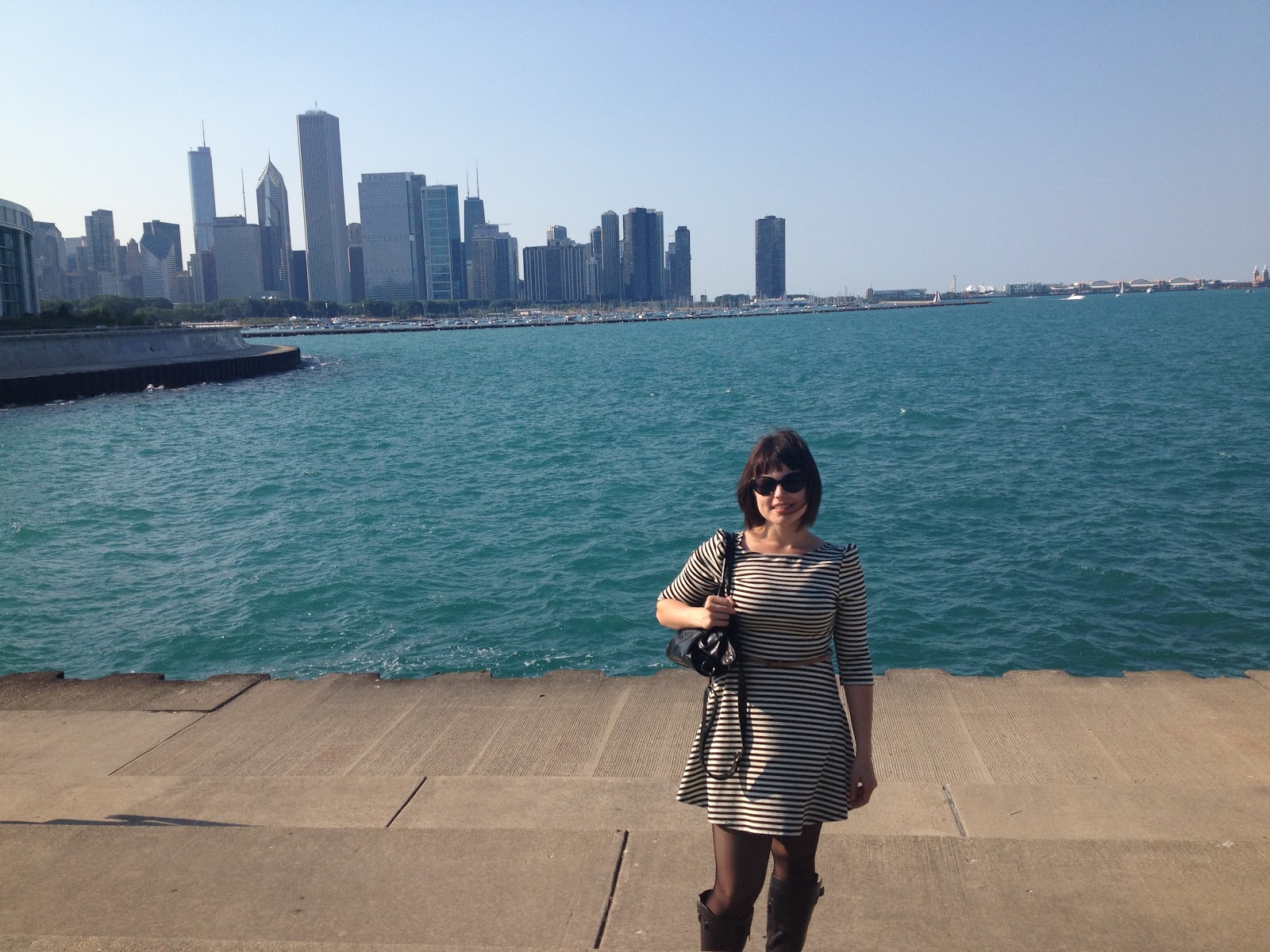
I have no pictures from Chicago part one except for like ten of this deer I found on a run and one hundred from the art museum--here's one of Chicago part 2.


·      SACRAMENTO: Shock when I got out of the car and realized it was actually summer.  Saw beloved long-lost cousin and fam—HELD A BABY.

·      CHICAGO, PART 2: More training, downtown this time.  Going out every night to museums and restaurants.  The architecture was amazing. Once I got lost in a horrible underground road complex walking home and I was terrified until I realized it was where they filmed the Dark Knight Joker-chasing-Harvey-Dent-in-his-truck scene, and then I was actually still terrified but also kind of jazzed.

Me on the Sears tower skywalk thing looking like I just had my wisdom teeth out.


·      PROVO, PART 1: Stopover from Chicago part 2.  Fun but brief; saw the girls at least.

My babies.

·      CARSON CITY: Amazing drive, did anyone actually know Lake Tahoe was that beautiful.  Best hike and conversation ever with Dana, also best casino food and popsicles.  OF COURSE NO PICTURES because I am the worst.

I do have like FOUR THOUSAND pictures from the Gaultier exhibit though.


·      PROVO, PART 2: Recruiting.  Stressful but glorious.  Reflected on how much more fun it was to drive up the hill to the alumni center in my comped rental than biking up the hill in the rain, exhausted and miserable, which is what I had been doing exactly one year ago.  Saw more friends and fam and that was lovely.  Ended up in a cabin in the dark telling scary stories which always ends well, psychically. 

Sarah and Sarah, besties from home, visited and we did everything from Redwoods to surrealist photography exhibits to watching/giggling about “Sherlock” all night.  In two weeks I am going to Cleveland with my mum and some just crazy awesome ladies to Bouchercon, this mystery-writers conference.

Two years ago I went with my mom to Bouchercon in San Francisco.  It was the first time I had ever been, and I liked it well enough to ask to live here.

The heroine from one of my most formative reading experiences is after all from this city.

And I am still in the process of settling in, getting into a groove with my job, and getting to know the city.  And trying to write a book.  Oh my goodness that stupid book.

But anyways.

Last year was a very, very hard year in my life which has included some hard times.  Recruiting this time was especially trippy—this time last year I was miserable and frantic and tagging along with my brother to info sessions.  I had no idea my life could improve so much in such a short time.  I am really really happy right now although it kind of terrifies me to write that because I am superstitious and it seems to be inviting disaster but oh well.

I'll just end with a creepy picture of me at a concert--see how happy I am.